What solves the freezer squeeze: shelf-stable feeding
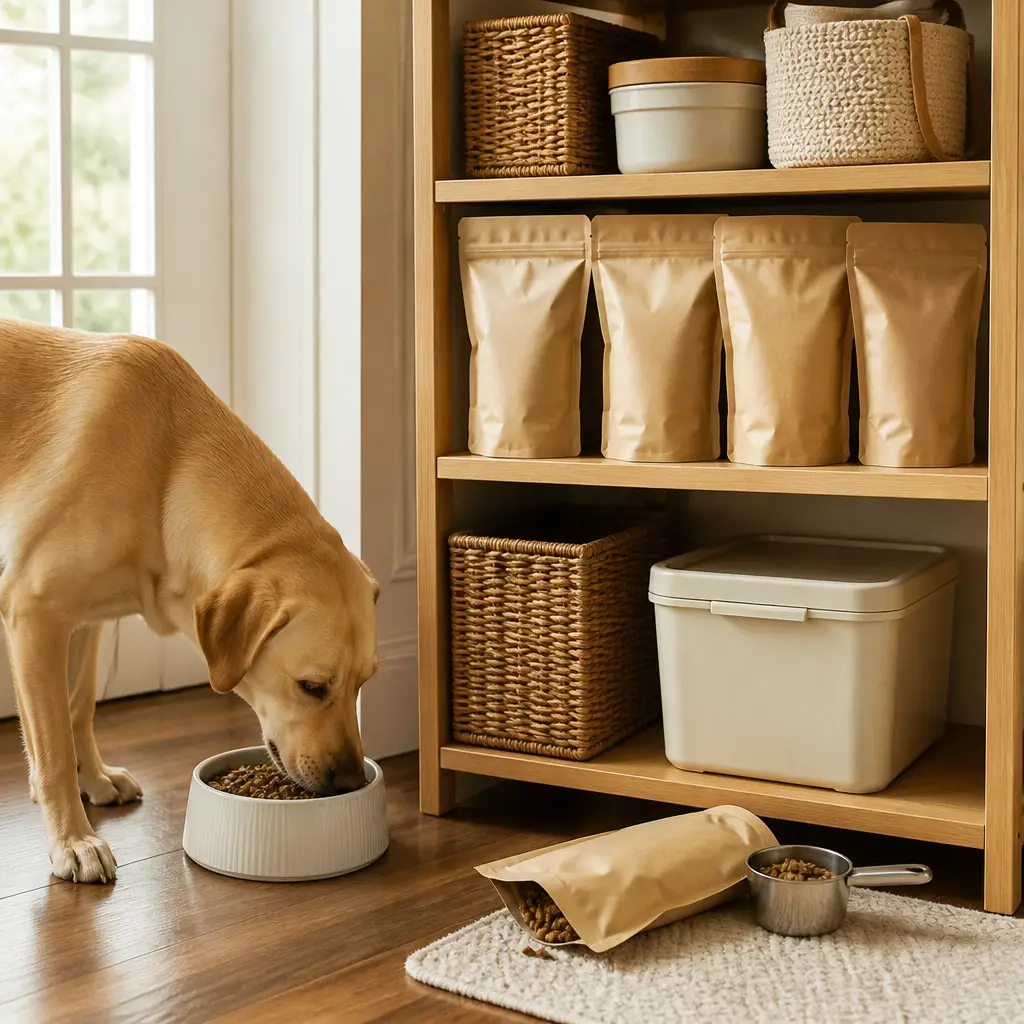
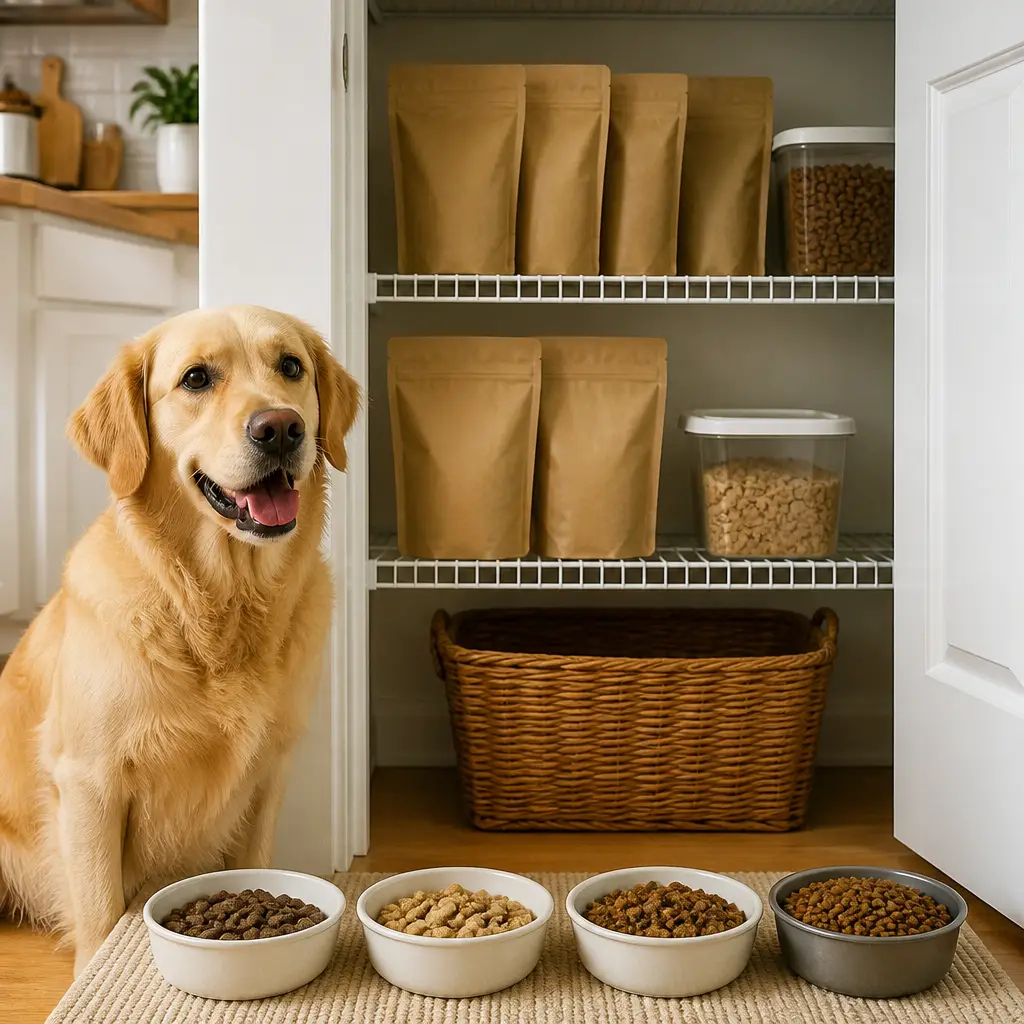
When the freezer is already doing overtime with human groceries, frozen dog food rolls or subscription blocks can pack one drawer so tightly that nothing else fits. Shelf-stable dog foods, such as air-dried, freeze-dried, dehydrated, and retort (cooked and sealed) pouches, come in compact, pantry-friendly formats without requiring limited freezer space. The practical difference is storage: pet food formats range from shelf-stable products to minimal processing in fresh and frozen varieties, and that processing choice affects shelf life. It also affects distribution needs and storage requirements.
So the decision is not about chasing one perfect format. It is about choosing the one your kitchen can support every day. If a food saves freezer space but creates a new problem in the fridge or on the counter, or it slows the morning bowl routine, it may not solve the squeeze you started with.
The quick verdict: which format fits your kitchen routine?
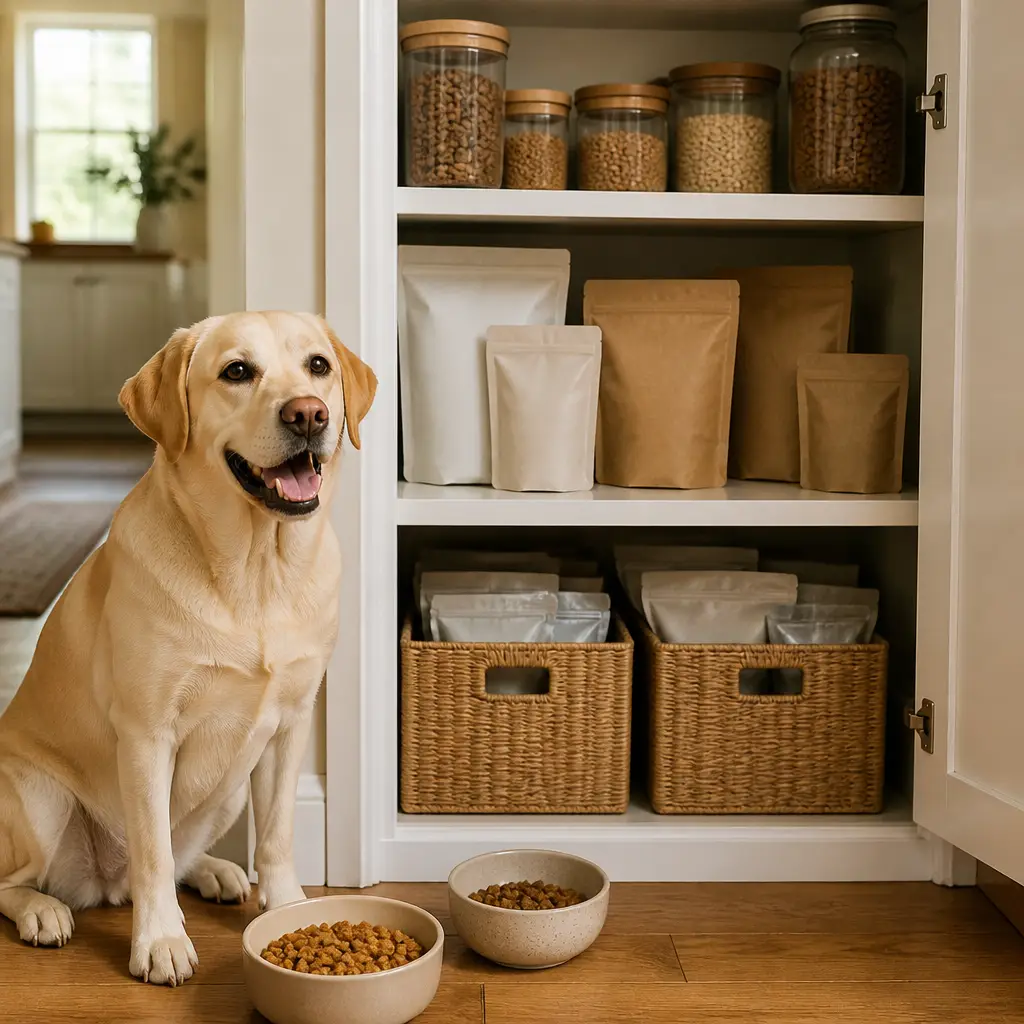
The short answer: choose freeze-dried or air-dried if your main problem is freezer space and you want compact pantry storage. Choose dehydrated if you are comfortable following package directions at serving time. Choose retort pouches if you want a cooked, shelf-stable format but can manage any after-opening fridge instructions on the label.
The main trade-off is simple: the more a format depends on pantry stability, the more carefully you need to read the package for serving and after-opening handling. Fresh pet food is described by the CDC as refrigerated, cooked with fewer or no preservatives, and shorter in shelf life than dry kibble or canned foods, so a shelf-stable option can reduce the space pressure that comes with frozen or refrigerated formats. Still, "shelf-stable" does not mean every bag, pouch, or box behaves the same once it is opened.
Freeze-dried foods usually make the most sense for pet parents who want a small pantry footprint and are comfortable checking the label for whether water is needed before serving. Air-dried foods sit in a similar storage lane, though the provider still decides the exact package size and portioning style, as well as the feeding directions. Dehydrated foods can be easy to store, but they often create more of a serving routine because the package directions matter at each meal. Retort pouches are useful when you want a cooked and sealed format that does not need freezer space before opening, but they may move the storage question from the freezer to the refrigerator after opening.
For a small kitchen, ask where the unopened food goes and what happens after opening, then consider how much attention each meal needs. A food that fits neatly on a pantry shelf but leaves you juggling half-used pouches may still be the wrong match. A format that asks for an extra serving step may be fine if your routine is calm, but annoying if breakfast already happens while you are getting ready and your dog believes the bowl is late.
How we compare shelf-stable dog foods: 5 key logistics factors
A useful comparison starts with kitchen logistics rather than marketing language. We look at shelf-stable dog food from the pet parent's side of the cabinet: where it is stored before opening, what happens after opening, how easy it is to portion, and whether the delivery size matches your storage space.
Unopened pantry footprint comes first because a small freezer often belongs to a small kitchen. Bags, boxes, tubs, cartons, and pouches all take up different shapes of space, even when the food itself does not need cold storage. After opening this type of food, fridge space then comes next, because some formats may be pantry-stable only until the package is opened. Preparation protocol matters too. Some products are served straight from the package, while others require you to follow package directions before the bowl goes down.
Portioning ease is the fourth factor. A format that lets you measure a meal without thawing, cutting, or repacking can make weekday feedings more convenient. Shipping flexibility is the fifth, because a large case count can defeat the purpose of choosing a compact format, if the delivery of the food needs a considerable amount of storage space at once.
Dry pet food has long been built around shelf stability. Modern kibble traces back to the extrusion (cooked under pressure and pressed into shape) of wet and dry ingredients into a shelf-stable format in the 1950s. The newer question for many pet parents is whether other pantry-friendly formats can meet the same space need while fitting a different feeding routine.
Comparison matrix: storage and prep trade-offs by format
The fastest way to narrow your shortlist is to separate "what fits in my pantry" from "what fits in my day." This table keeps the focus on handling, not brand claims.
| Format | Unopened storage fit | After-opening fridge demand | Prep method | Portioning ease | Shipping and backup fit |
|---|---|---|---|---|---|
| Freeze-dried | Usually compact for pantry planning, predictable package size | Check the label for opened-package instructions | Follow package directions, including any water addition step | Often easy to measure, depending on shape | Good option for limited storage space |
| Air-dried | Usually pantry-friendly, known bag dimensions | Check the label | Often easy, but refer to label directions | Often simple to scoop or measure | Good for travel planning if the product allows for it |
| Dehydrated | Often compact before serving | Check the label | Higher if serving requires water or waiting for rehydration | Depends on the package and directions | Good if prep steps are suitable to your lifestyle |
| Retort pouches | Pantry-friendly before opening | Often the main thing to verify | Usually low before opening | Easy if pouch size matches meals | Good if case size fits your cabinet |
(I am not sure what backup fit actually means)
The table is deliberately practical. Package size is provider-specific, as are opened-package instructions and serving directions, so the right answer comes from matching the format to the space you actually have.
Comparing the 4 formats: everyday storage and prep logistics
Freeze-dried food is often the first pantry format pet parents consider when freezer space is the pain point. Its main advantage is that unopened packages can be planned around a shelf or cabinet instead of a freezer drawer. The trade-off comes at the bowl: some products may direct you to add water or follow a specific serving step, and you should follow the package rather than guessing. It can be a good match if you want to keep food compact and you do not mind a label-led routine.
Air-dried food works in a similar storage lane, but it may feel simpler if the label directions fit your current mealtime rhythm. The appeal is that most of the practical decisions happen before you buy: bag size, serving amount, and where the opened package belongs. If you travel with your dog or split time between homes, air-dried formats can be easier to think through than frozen packs, as long as the manufacturer's storage directions support that use.
Dehydrated food asks for the most honest look at your patience. It can be space-efficient before serving, but the serving process may depend on package directions in a way that matters during busy mornings. If you are organized and do not mind a repeatable prep step, it may fit well. If you need to feed quickly with no extra thinking, that step may become the reason the bag sits untouched.
Retort pouches solve a different version of the problem. They are cooked and sealed, so they can be stored without taking freezer space before opening when sold as shelf-stable products. The catch is after-opening storage. If your dog eats a whole pouch at a meal, the logistics may be tidy. If you regularly use partial pouches, you need to confirm whether the opened package needs refrigeration and whether your fridge has room for that pattern.
None of these formats removes the need to read the label. The point is to move the hard part earlier, before a delivery lands on your doorstep and you are trying to make it fit between frozen vegetables and leftovers, with the ice cube tray taking up the remaining space.
Which format should you choose for your space and routine?
If your freezer is full and your refrigerator is not much better, start with freeze-dried or air-dried formats and check the opened-package directions before you commit. These are the most straightforward pantry-first choices for pet parents who want to avoid shifting the storage problem from one cold space to another.
If you travel with your dog, choose a format only after confirming the label's storage directions for unopened and opened packages. Air-dried and freeze-dried options are often easier to pack than frozen food from a space-planning point of view, but the label still decides what is reasonable. For emergency backup, use the same filter: choose a package size you can rotate through. Store it where the label says, and serve it according to the directions.
If you are a busy weeknight feeder, retort pouches may fit when the pouch size lines up with your dog's meals and the opened-package instructions do not create fridge clutter. If your dog eats smaller portions, the pouch math matters more because partial packages can become the daily annoyance.
If you like buying in larger pantry quantities, compare case dimensions and package counts before choosing among dehydrated options and the air-dried or freeze-dried formats. A format can be shelf-stable and still arrive in a case that overwhelms your cabinet. All For Your Furbaby uses delivery and logistics criteria in its comparisons because those practical details often decide whether a food works in a real home.
Your verification checklist before ordering shelf-stable meals
Before you order, slow the decision down to the few details that prevent storage regret.
- Confirm the unopened package dimensions and total case size.
- Check whether opened packages need refrigeration.
- Read the serving directions, including any water or waiting step.
- Compare the package size with your dog's usual meal size.
- Look for the nutritional adequacy statement on the label.
- Talk to your veterinarian before changing your pet's diet.
That checklist is intentionally plain because the problem is plain: a food has to fit your home before it can fit your routine. Shelf-stable formats can take pressure off a small freezer, but the right choice is the one whose storage instructions match the way you actually feed your dog, including serving and opened-package directions.